The music
Greek folk music and instruments
A short guide to Greek folk music: the demotic songs, the two tempos, the dances and the instruments, from Cretan lyra to northern clarinet and zurna.
Reserve a table for the evening ↗Quick answer
Greek folk music, called demotiko, is the traditional music of the mainland and islands, with roots in Byzantine times. It has two main tempos, the slow syrtos and the leaping pidiktos, and instruments change by region: lyra and laouto in Crete, clarinet in Epirus, zurna and drum in Macedonia. Which instruments you hear at a given dinner depends on the musicians playing that night.
Demotic songs: the old backbone
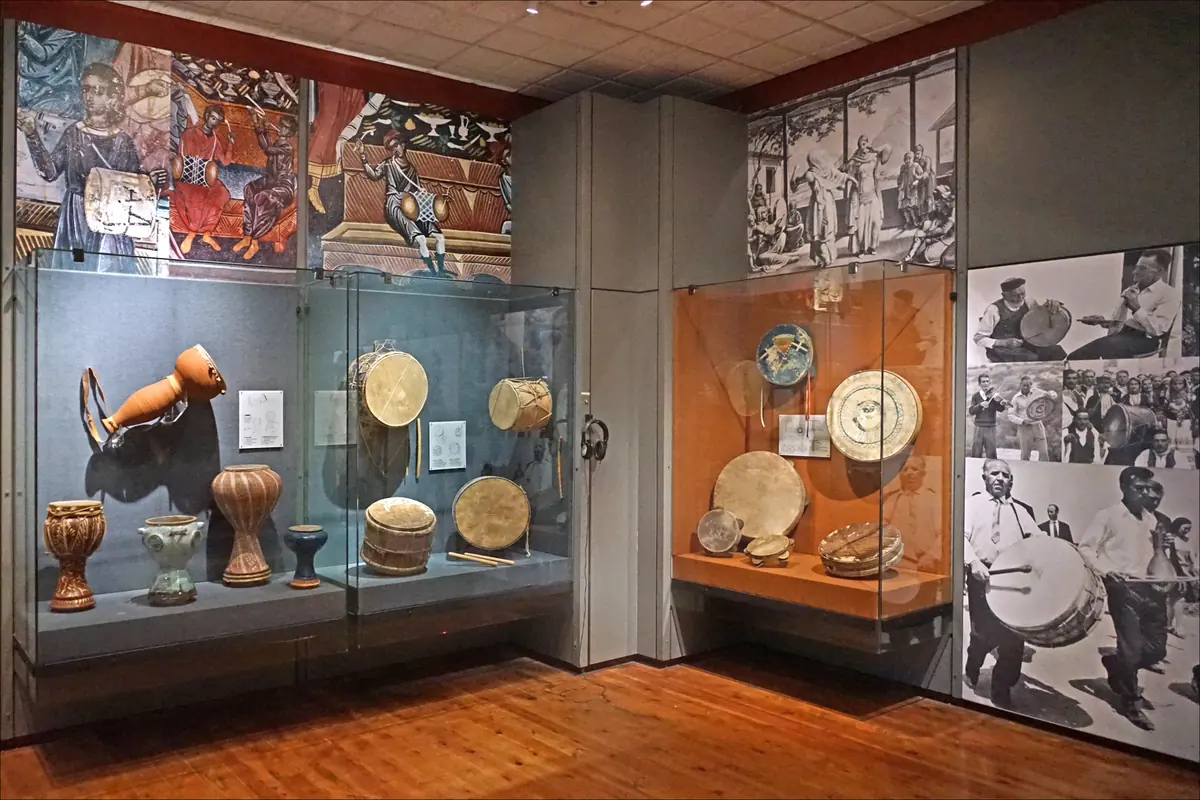
Wikipedia calls demotiko, also known as demotic or paradosiako, the traditional popular music of mainland Greece and the islands, and dates it to Byzantine times. It was the main popular genre until rebetiko and laiko spread in the early twentieth century, carried partly by refugees from Asia Minor. Its lyrics rest on anonymous demotic poetry about love, marriage, death, nature, the sea and religion, and some songs recall the klephts, the insurgents of the Ottoman period. Treat it as a family of regional traditions, not as one tune with one sound.
Two tempos and the dances
The songs use two main tempos. The syrtos is slower and flowing; the pidiktos is livelier and involves leaping, and some songs combine both. Dances that go with this music include the kalamatianos, the tsamiko, the ballos and the sousta. The hasapiko is danced across most of Greece to the bouzouki, and Wikipedia reports that it began as a Byzantine military sword exercise before butchers danced it in social settings. Wikipedia's article carries maintenance notes, so treat these origin stories as the article's account and not as settled history. Wikipedia adds that syrtos music in Thessaly is livelier than elsewhere in Greece.
Crete and the islands
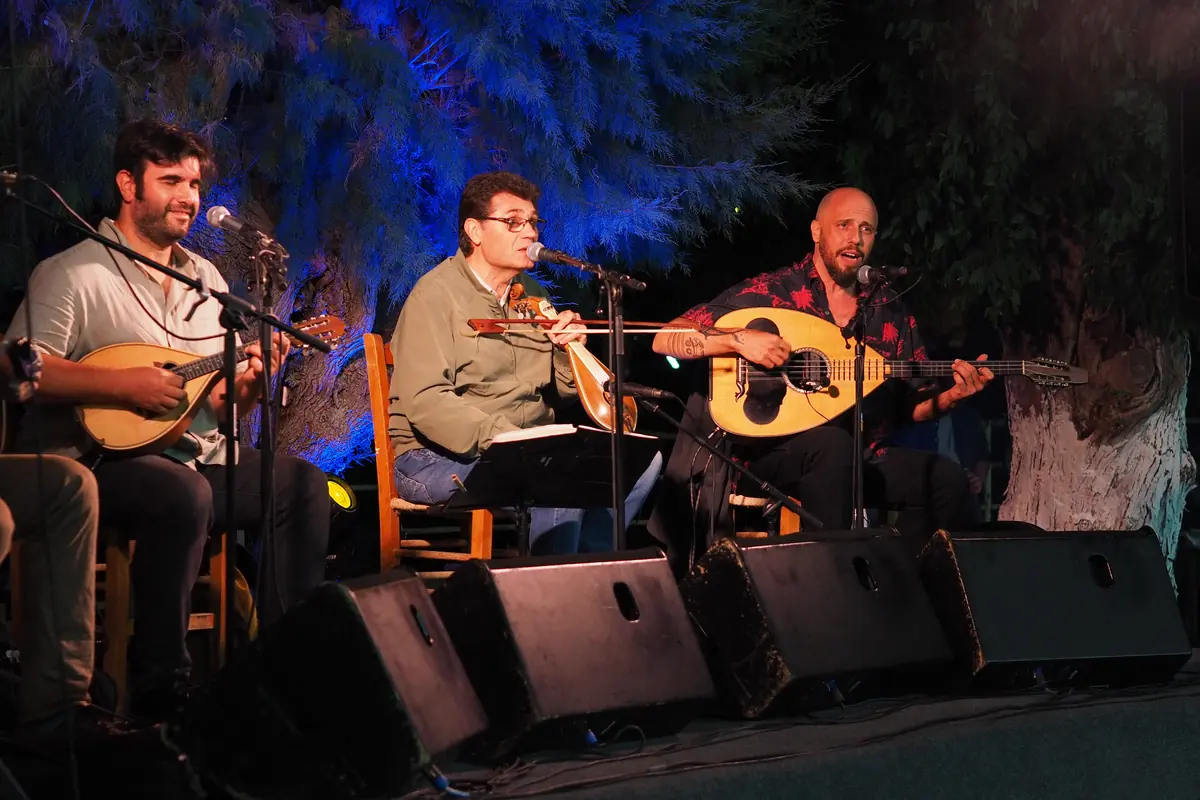
On Crete and nearby islands the Cretan lyra dominates, often accompanied by the laouto, a long-necked lute. A bagpipe called the askomandoura is also played. Across the Aegean islands the music has Byzantine roots and island isolation produced distinct local styles. In the Cyclades, the violin is more common than the lyra, played alongside the clarinet, the mandolin and the dulcimer. In the Ionian islands, a different tradition of romantic serenades called kantades, sung by three men with mandolin or guitar, reflects Venetian influence. Each island group, in other words, has its own sound.
The mountains and the north
In Epirus, songs are pentatonic and polyphonic, sung by men and women, and the clarinet largely replaced the lute in the nineteenth century. Macedonia favours the zurna, a wide oboe, with the daouli, a bass drum, alongside violin and clarinet. In Thrace the gaida, a goatskin bagpipe, is common. The Pontic lyra, or kemenche, is a bowed instrument central to Pontic music, which keeps Byzantine and Caucasian elements. Reading these differences helps explain why one Greek folk band can sound so unlike another, even when both are playing traditional music. Epirote songs fall into three kinds, according to Wikipedia: laments, instrumental pieces and drinking songs.
What you may hear at the dinner
The dinner theatre includes live traditional music played by folk musicians while you eat, and the organiser's account describes it as traditional without naming instruments. Bands vary by date, so no guide can promise a lyra, a clarinet or a laouto on your night. Because the evening tells regional stories, it is reasonable to hope the music reflects the regions, but treat that as a possibility. The best preparation is curiosity: listen for the instrument that leads and ask the musicians afterwards.
Read next: Athens dinner theatre: how to book
Who this isn't for
This is a background guide to a tradition, not a concert programme. If you want a night of a particular style, such as rebetiko or a bouzouki club, this dinner theatre is not that, because it has live folk music woven into storytelling rather than a set list of one genre. If that is what you want, look for an evening that names the style and the performers, and read its booking page for the programme before you pay.
Frequently asked questions
What is demotiko?
The traditional popular music of mainland Greece and the islands, with roots in Byzantine times and lyrics drawn from anonymous demotic poetry.
Which instrument is Cretan?
The Cretan lyra, a bowed instrument, often played with the laouto, a long-necked lute.
Will there be bouzouki at the dinner?
That depends on the musicians. The organiser names live traditional music but not instruments, so nothing is promised.
Sources